The Night That Changed Everything
On the night of May 6-7, last year, India did something it had never done before. It launched precision air and missile strikes deep inside Pakistan - not just across the Line of Control, but into Pakistan's Punjab province itself. The targets were the headquarters of Lashkar-e-Taiba in Muridke and Jaish-e-Mohammed in Bahawalpur - the two groups responsible for decades of terror attacks on Indian soil.
The trigger was the Pahalgam massacre. On April 22, Pakistan-backed terrorists walked into a meadow near Pahalgam in Kashmir, asked tourists their religion, and shot 26 men dead. Every victim was Hindu, targeted by faith. It was the deadliest civilian attack in India since the 2008 Mumbai bombings.
India's response - code-named Operation Sindoor - was over in 22 minutes for the initial strike wave. Nine terror camps were destroyed. Defence analysts confirmed that the opening strikes bypassed and jammed Pakistani air-defence systems within minutes. What followed was four days that rewrote South Asian security forever.
What Actually Happened in Those 88 Hours
Pakistan retaliated on Day 2 with drones and missile strikes on Indian military bases. India escalated. By Day 3, India had struck 11 Pakistani airbases - including Nur Khan in Rawalpindi, Sargodha, Jacobabad, and Bholari. India's Akashteer air defence network intercepted Pakistan's drone swarms. The S-400 Sudarshan Chakra battery shot down incoming ballistic missiles. Not a single Pakistani strike reached its intended Indian target.
On the morning of May 10, India deployed BrahMos missiles to strike all 11 Pakistani airfields within 45 minutes. Air Marshal Sanjeev Kapoor, reviewing the operation publicly, said plainly: that strike brought Pakistan to the table.
At 3:35 PM on May 10, Pakistan's military operations chief called India's military operations chief on the direct hotline. Pakistan asked for the ceasefire. India accepted - on India's terms. The guns fell silent at 5:00 PM.
US President Trump announced the ceasefire on social media before either government made an official statement. India's Ministry of Information and Broadcasting responded clearly: the ceasefire was worked out directly between the two countries, with Pakistan's side initiating the call. No third party brokered it.
The Scale of What India Was Answering
India was answering three decades of state-sponsored terrorism that Congress governments repeatedly refused to punish.
After the 2001 Parliament attack, India did not strike. After the 2008 Mumbai attacks that killed 166 people, India chose not to strike either - the government cited lack of military preparedness and feared international pressure. Each time India held back, Pakistan's military read it as permission to continue. By the time Operation Sindoor was launched, India had made the political and military preparation that past governments never completed. When India struck, no major power demanded proof of Pakistan's culpability. The Diplomat's analyst Swasti Sachdeva noted that India has reduced Pakistan's ability to delay, deny, or internationalize such attacks - a significant break from every prior crisis.
What India Had Already Done - The Preparation That Made It Possible
Operation Sindoor did not come from nowhere. It came from years of deliberate investment that the Modi government began after the Uri attack in 2016 and accelerated after the Balakot air strike in 2019.
After Uri, India launched cross-Line of Control surgical strikes - the first time India publicly acknowledged such an operation. The BrahMos integration programme, Akashteer network, and S-400 acquisition that followed Balakot were all decisions made years before Sindoor that showed up in combat.
India's defence budget has tripled since the mid-2010s, reaching approximately Rs 7.85 lakh crore for the upcoming financial year, according to Rubix Data Sciences. Finance Minister Nirmala Sitharaman announced a further 15% increase in the most recent defence budget after Sindoor - approximately $87 billion in total. In the past year alone, India's Defence Ministry approved acquisitions worth Rs 6.81 lakh crore.
How Other Countries Built Deterrence That Held
Israel: Hold the Sponsor Responsible
Israel faced a similar problem for decades. Non-state actors backed by hostile states attacked Israeli civilians. Israel's answer was to hold the sponsoring state responsible, not just the attackers. It struck hard, communicated clearly why it struck, and made the cost of supporting terror obvious. India has now adopted the same logic. PM Modi stated publicly that India will no longer distinguish between terrorist groups and the states that back them. Defence Minister Rajnath Singh confirmed that any attack on Indian soil is an act of war.
South Korea: Grow the Economy, Strengthen the Military at the Same Time
South Korea sits next to a nuclear-armed rogue state that regularly fires missiles. Its answer was to build the strongest conventional military it could afford, sign defence treaties with allies, and keep growing its economy regardless. South Korea is now the 13th-largest economy in the world and has one of the most capable militaries in Asia.
India is on the same path. During all four days of Operation Sindoor, India's 10-year government bond yield stayed anchored between 6.4% and 6.6%. Global investors did not treat India as a war zone. They treated it as a growing country that was handling a border problem. That is what strategic credibility looks like.
The Economic Score - One Year On
Every economic sanction India imposed after Pahalgam remains in place.
India suspended the Indus Waters Treaty - the 1960 agreement governing water sharing. Home Minister Amit Shah confirmed it will not be restored. India fast-tracked three major dam and canal projects, including a 113-kilometre canal connecting the Chenab River to the Ravi-Beas-Sutlej system. When completed, these will permanently change water availability for Pakistan's agriculture.
India-Pakistan trade has nearly collapsed. Ministry of Commerce and Industry data shows bilateral trade has fallen to Rs 2,940 crore - from roughly Rs 10,000 crore before the attack - with Pakistan running a near-total deficit. The Attari-Wagah border crossing remains shut.
Pakistan's economy is bleeding. Operation Sindoor deepened Pakistan's stress across tourism, aviation, and trade. Pakistan's consumer price inflation is estimated to rise from 4.5% to over 7% in the coming year. International buyers have shifted sourcing to Bangladesh, Vietnam, and India. Pakistan remains on a $7 billion IMF lifeline, now under 11 new conditions imposed after Sindoor, with future payments tied to strict reform targets.
Pakistan's airbases are still not fully repaired. Satellite imagery confirms ongoing construction at Nur Khan, Jacobabad's Shahbaz Air Base, and Bholari - with damaged hangars, destroyed fuel depots, and unrestored radar systems.
The Defence Export Dividend
Operation Sindoor turned India into a serious defence export power almost overnight.
India's defence exports for the most recent financial year reached Rs 38,424 crore - a 62.66% jump from the year before, according to Ministry of Defence data released in April. Global buyers watched Indian weapons perform in real combat, against a real adversary, under real conditions.
Between July last year and March this year, India secured Rs 24,000 crore in new export orders. The systems driving demand are BrahMos, the Akash-NG air defence system, indigenous loitering munitions, and the Netra airborne surveillance platform. India now exports to over 80 countries. Defence Minister Rajnath Singh confirmed new BrahMos contracts worth approximately Rs 4,000 crore signed with two undisclosed countries.
The private sector contributed nearly half of all defence exports - Rs 17,352 crore - a 54% increase in one year. Around 1.5 lakh jobs are supported by this export momentum. India's defence production has grown 3.2 times over ten years, reaching Rs 1.54 lakh crore, with the government targeting Rs 3 lakh crore by the end of the decade.
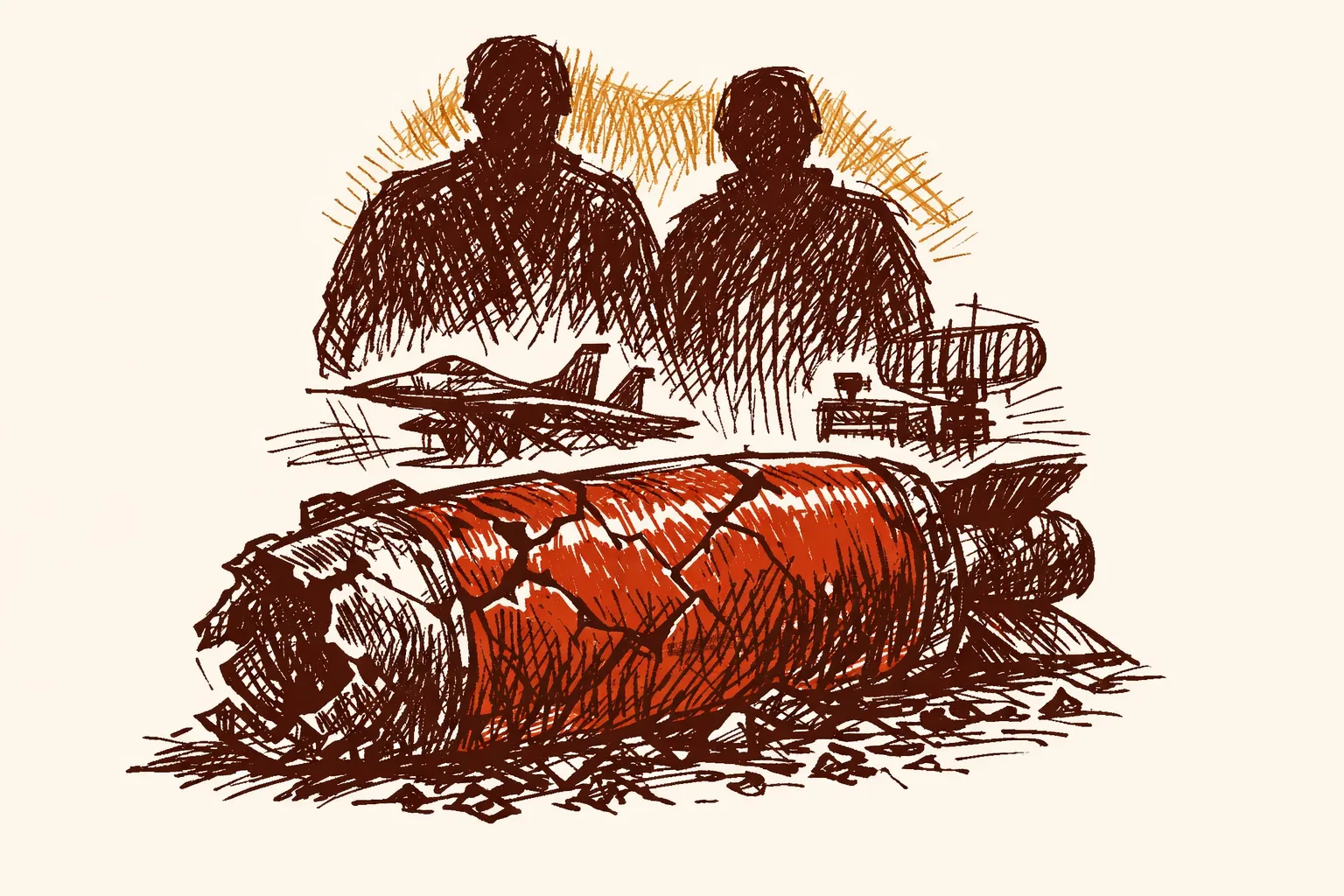
The China Problem India Cannot Ignore
Operation Sindoor revealed something India's strategic community must now treat as a permanent fixture: China was not a bystander.
India's Deputy Army Chief Lieutenant General Rahul Singh stated directly that Pakistan was backed by China and Turkey during the conflict. China admitted sending experts to Pakistani air bases. Pakistan flew Chinese-supplied J-10C jets, fired Chinese PL-15E long-range missiles, and used Chinese HQ-9 air defence batteries. None of it stopped a single Indian strike.
A Chinese PL-15E missile was recovered largely intact in Hoshiarpur, Punjab, after it failed to detonate - giving India valuable intelligence on Chinese weapons technology. Any future crisis will have a two-front character. India is already building around this reality.
The newly formed Rudra all-arms brigades - permanently structured combat groupings that integrate armour, artillery, special forces, and drones under unified command - are designed for short, intense engagements on both the Line of Control and the northern border. India also received its fourth S-400 squadron from Russia, deployed in Rajasthan, and approved a $25 billion modernisation package covering additional air defence systems and drone fleets.
Who Is Accountable
The Ministry of Defence under Rajnath Singh owns India's modernisation agenda and must drive the new fast-track procurement system - contracts in six months, deliveries in two years - to completion without slippage. The Ministry of External Affairs under S. Jaishankar owns the diplomatic task: locking in the international consensus that Pakistan is the aggressor and that Indian strikes were legitimate. The Intelligence Bureau and Home Ministry own the intelligence failure that allowed five armed terrorists to reach a tourist meadow in a high-security zone. The opposition raised this in a 16-hour Lok Sabha debate. It is a real gap that must be closed.
What Needs to Happen Now
The Indus Waters Treaty must stay suspended. Water is Pakistan's most important strategic vulnerability. India does not need to weaponise it - it just needs to stop treating it as separate from Pakistan's behaviour on terror.
The intelligence gap at Pahalgam must be closed. Real-time surveillance of high-risk tourist areas in Kashmir is not optional. The space for restraint narrows with each cycle. The way to break that cycle is to prevent the trigger, not just manage the response.
India must press the US harder on Pakistan's Major Non-NATO Ally status. Genuine friends do not arm the country that just killed 26 of your tourists. The Atlantic Council's own analyst said this plainly: if the US wants India's trust, it must put the burden of counterterrorism proof on Pakistan.
India must turn defence export momentum into a real security architecture. Countries buying BrahMos and Akash are countries that face Chinese pressure. That is the beginning of a coalition. India should treat it as one.