The View from the Region
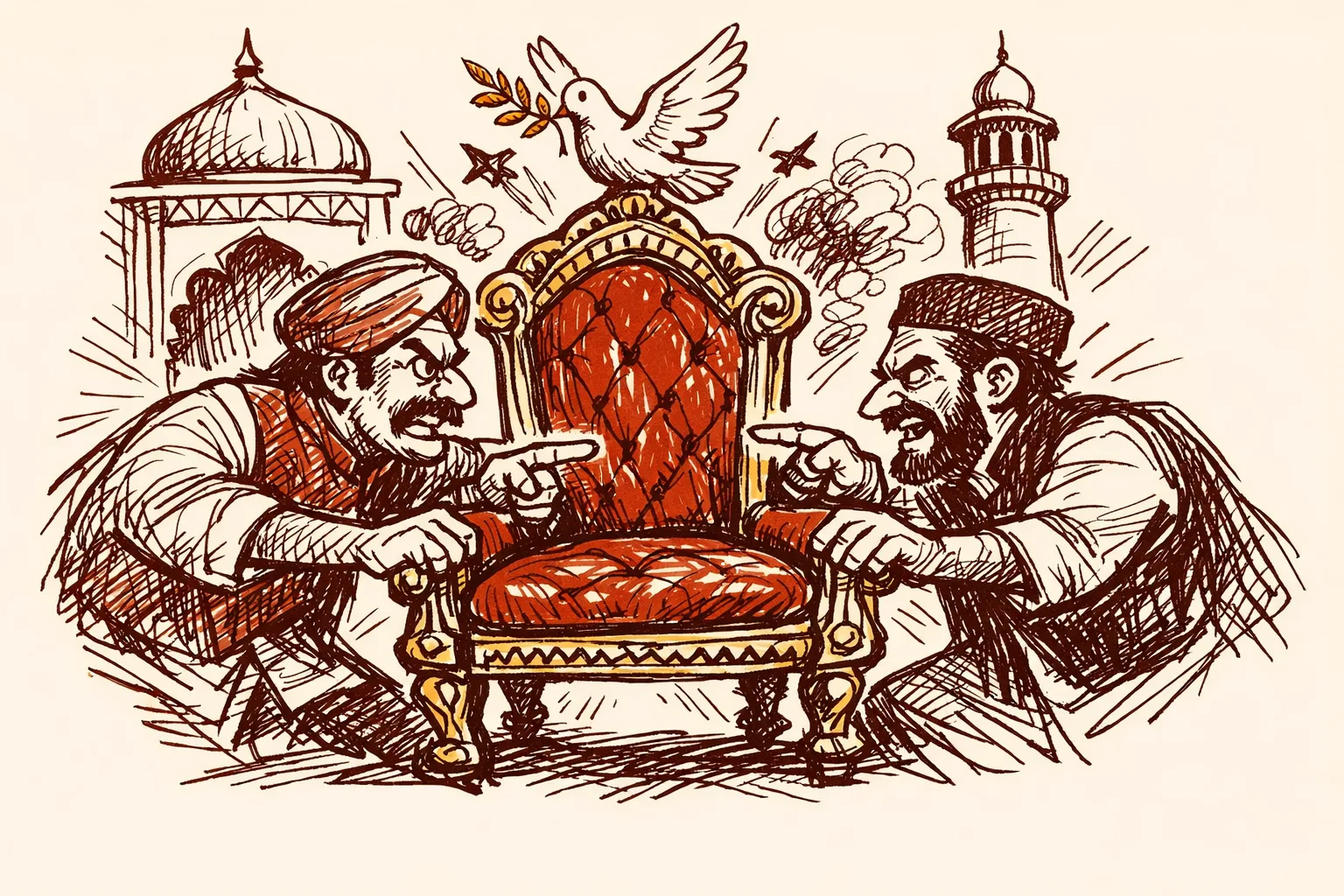
Picture this. A war is burning in the Middle East. The world's third-largest oil importer - that is India - has nearly one crore citizens living in the Gulf. The Strait of Hormuz, the narrow passage through which a massive share of India's energy flows, is under threat. India has the economy, the relationships, and the civilizational ties to be at the center of every diplomatic conversation happening right now.
Pakistan is currently carrying US proposals to Tehran. Pakistan is offering to host peace talks. Pakistan's army chief is being called Washington's "favorite Field Marshal" by the US president himself.
This is a moment that calls for India to activate - not a moment to describe India as absent.
This is not spin from Western media designed to pressure India into choosing sides. India's strategic autonomy doctrine is real and worth defending. But the doctrine works best when paired with active engagement. The evidence is clear enough that India deserves an honest accounting of what comes next.
The Scale of What India Protects
Let us start with money, because that is where the stakes are real and immediate.
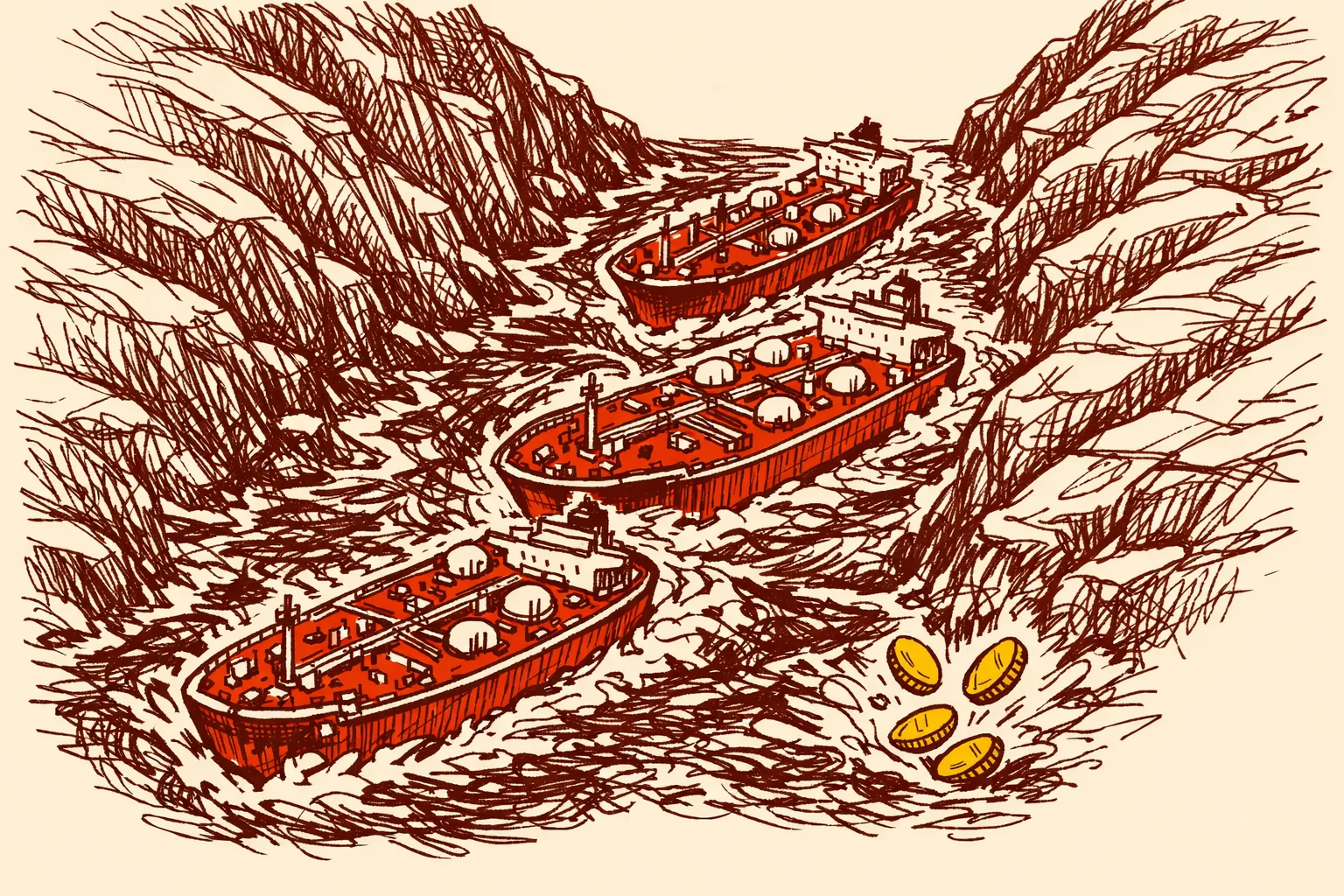
According to India's Ministry of Petroleum and Natural Gas, India consumes about 5.5 million barrels of crude oil per day. Before the current war, roughly 45 percent of those imports passed through the Strait of Hormuz. India imports over 85 percent of the oil it needs, and about 60 percent of that oil comes from Gulf producers like Saudi Arabia, Iraq, the UAE, and Kuwait.
MUFG Research estimates that a sustained Hormuz closure could push the rupee above 95 per dollar. India also imports about 60 percent of its LPG needs, and 90 percent of those imports come through the Strait. By March, India's domestic LPG production had to be ramped up by 25 percent just to offset disruption.
India is already the second-largest destination for Hormuz oil flows at 14.7 percent, according to the US Energy Information Administration. That thin waterway between Iran and Oman is not a foreign-policy abstraction. It is the price of cooking gas in Delhi. It is the cost of diesel for a truck driver in Punjab. Protecting those arteries is exactly why India needs a stronger diplomatic presence in the region.
How Pakistan Got the Seat - and Why India Has Better Assets
Pakistan did not stumble into this role by accident. The Centre for Strategic and International Studies notes that Pakistan has a 565-mile-long border with Iran, strong military ties with the US, and close relations with Saudi Arabia. Pakistan's army chief met Trump at the White House, and Trump separately told media that Pakistanis "know Iran very well, better than most." Pakistani leaders spoke to both Trump and Iranian President Pezeshkian in the same week.
That is the mechanics of how Pakistan got the seat. But Pakistan's position is transactional and fragile. Pakistan is playing this role partly to boost its own standing with Washington - a relationship built on short-term utility, not lasting strategic depth. Pakistan still faces deep domestic instability, an ongoing conflict with Afghanistan, and one of the most severe economic crises in its history. A country borrowing from the IMF to keep its lights on is not a durable diplomatic anchor.
India's structural advantages are far stronger. India does not want to become a subordinate in anyone's alliance system. As the Observer Research Foundation has written, India has pursued strategic autonomy by "identifying and exploiting the opportunities created by global contradictions." India buys Russian oil, partners with the US on technology, maintains the Quad, and sits in BRICS - all at the same time. That flexibility is not weakness. It is India's greatest diplomatic asset.
The opportunity now is to pair that flexibility with active, visible engagement. The timing of Prime Minister Modi's visit to Israel created optics challenges - US and Israeli strikes on Iran began less than 48 hours after Modi left Tel Aviv. A former Indian ambassador quoted by CNBC noted the visit "has completely ripped India off its neutrality." India was the only founding BRICS member that did not respond to Iran's request to condemn the attacks, according to CNBC. The Christian Science Monitor reported it took several days for New Delhi to make limited outreach to Iran.
In diplomacy, timing is substance. India's silence was read as a choice. The next move is to change that reading - fast.
The Economic Prize Waiting at Chabahar
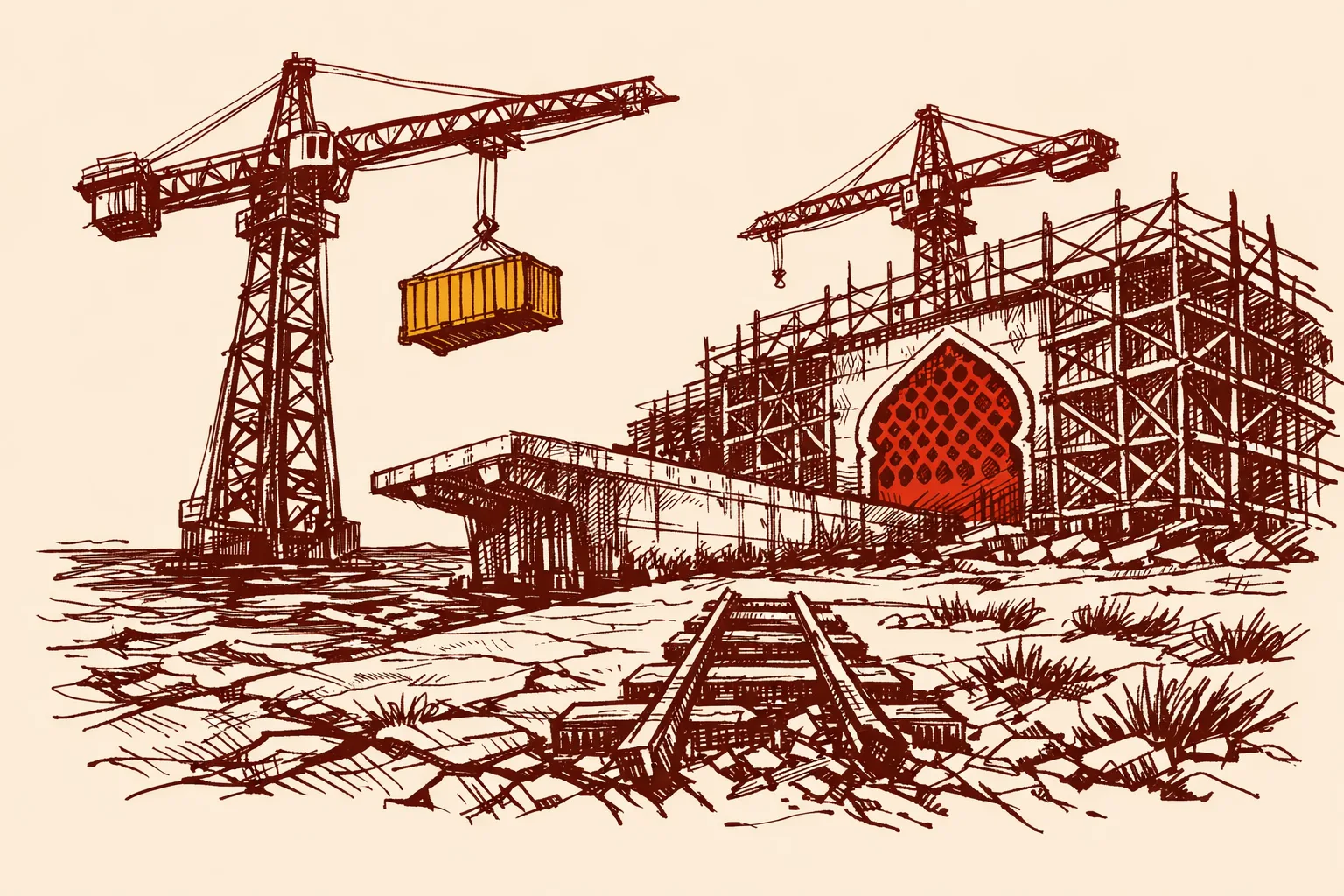
India has invested heavily in Chabahar Port, Iran's only deep-sea port with direct Indian Ocean access. India signed a 10-year operating agreement with Iran for the port and has pledged $250 million in credit for its development. The port is India's gateway to Central Asia, bypassing Pakistan entirely - cutting trade costs by 30 percent and transportation time by 40 percent, according to government calculations.
The Observer Research Foundation estimates that Chabahar could unlock bilateral trade potential with Central Asia worth over $200 billion. That is the prize. Realizing it requires credibility in Tehran.
There is also the Kashmir dimension. In 1994, when Western powers were pushing a resolution against India on Kashmir at the Organisation of Islamic Cooperation, it was Iran's president who blocked the move. That relationship took decades to build. India's adversaries will always look for ways to exploit divisions. Maintaining Tehran as a quiet partner protects one of India's most important diplomatic shields on Kashmir.
What Has Already Been Built
India has attempted versions of proactive regional diplomacy before - and some have worked well.
India's "Act East" policy, launched alongside "Neighbourhood First" in 2014 under Modi's government, produced real results - stronger ASEAN ties, the Quad framework, and a clear strategic orientation toward the Indo-Pacific. These were genuine achievements that repositioned India as a proactive power.
India's engagement with Iran on Chabahar has been continuous since 2003. The long-term operating agreement is India's most serious commitment yet. The Modi government has consistently championed Chabahar as a strategic priority. The Chabahar-Zahedan railway, however, remains incomplete. Iran eventually started building the rail link independently because Indian funding was delayed. That pattern - strong vision, execution speed to be improved - is the thread that needs fixing in India's regional diplomacy.
How Other Countries Built Diplomatic Presence
Qatar - Small Country, Big Table
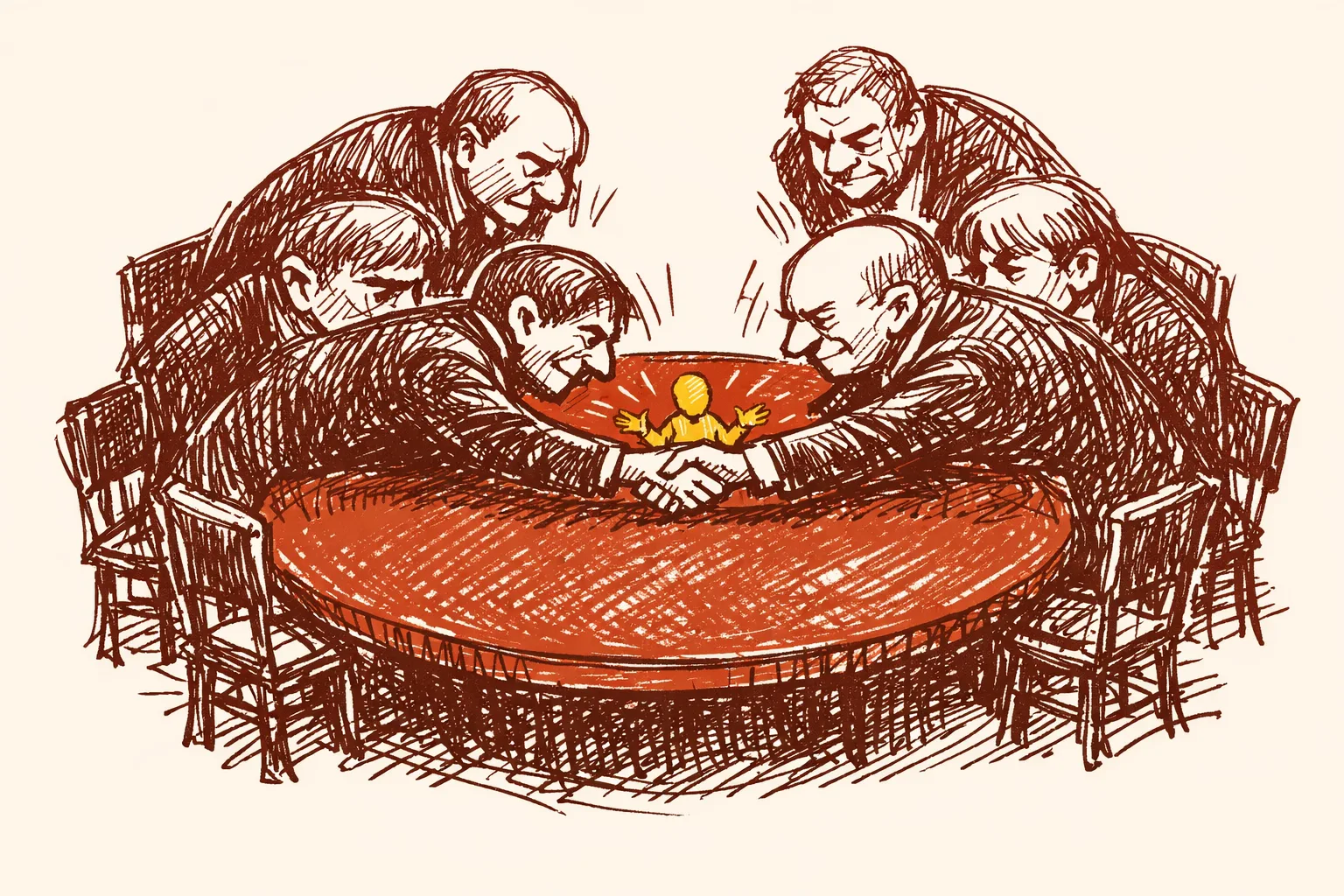
Qatar has a population smaller than Chennai and no military power to speak of. Yet over the past three decades, it has brokered peace in Lebanon, hosted US-Taliban talks, mediated between Israel and Hamas, and gained Iran's approval to a US ceasefire proposal in the earlier phase of the Iran-Israel war.
According to research published in the Middle East Journal by Mehran Kamrava, Qatar built its role through "widely strong political connections, huge financial resources, reliability and impartiality." Qatar made mediation a formal part of its foreign policy - not a one-time gesture, but an institution with dedicated resources and consistent follow-through. The Washington Institute for Middle East Policy notes that Qatar's approach operates on "mutual respect and confidentiality."
India has every structural advantage Qatar has, plus 140 times the population and a far larger economy. What India needs is the institutional commitment to diplomacy-as-delivery, not diplomacy-as-announcement.
Turkey - Geography Plus Doctrine
Turkey hosts the Black Sea Grain Initiative, brokered peace in Ukraine, and has maintained ties with both Russia and NATO simultaneously. Turkey built permanent mediation infrastructure - dedicated foreign ministry units, institutional relationships with adversaries, and a reputation for confidentiality that kept both sides talking. Ankara made itself useful to everyone, which meant no one could afford to exclude it.
India can do this better. India's relationships are deeper, its economy larger, and its civilizational ties to the region older than Turkey's modern doctrine.
Who Is Accountable - and What They Must Deliver
India's Ministry of External Affairs controls the country's foreign policy doctrine and bilateral relationships. The Iran file sits within the MEA's West Asia and Africa division. The Chabahar port commitment falls under both MEA and the Ministry of Ports, Shipping and Waterways.
The gap here is not in funding or intent. It is in execution speed and proactive timing. Decisions about when to visit allies, what to say publicly about a conflict, and when to send a senior envoy are made at the top. Those decisions have measurable consequences - now visible in oil prices, rupee exchange rates, and Pakistan's temporary position at the diplomatic table. Clear ministerial accountability for Chabahar completion and Iran engagement is what converts good doctrine into real results.
What It Costs to Win
Completing the Chabahar-Zahedan railway requires approximately $1.6 billion in investment. India has committed funds multiple times. The money is not the obstacle. Execution speed is.
Building a permanent mediation and track-two diplomacy infrastructure within the MEA would cost far less than what India loses each time the Strait of Hormuz faces disruption. MUFG Research estimates a sustained Hormuz closure could push USD/INR to 97.50 at worst. That is not a diplomatic cost. That is an economic emergency India can help prevent by being present at the table.
The Three Moves India Should Make Now
India has ties with Iran through Chabahar, with the US through the Quad, and with Saudi Arabia and the Gulf through trade and diaspora. It has 1.4 billion people, the world's fourth-largest economy, and a civilizational relationship with Iran that predates the nation-states of Europe. The assets are there. The doctrine is sound. Now comes execution.
First: India must complete the Chabahar-Zahedan railway on a fixed timeline with ministerial accountability. Every delay signals to Tehran that India's commitments need reinforcement. A completed railway signals the opposite - that India delivers.
Second: India needs a permanent back-channel with Iran, maintained independently of whatever the US-Israel relationship looks like at any given moment. Chatham House analyst Chietigj Bajpaee has written that India "despite maintaining close relations with both Russia and the US, and both Iran and Israel, has played a limited role in trying to de-escalate recent conflicts" - comparing India's approach to Qatar, Turkey, Brazil, and even China. That gap is a choice India can reverse.
Third: India must define what "strategic autonomy" means in practice when a conflict breaks out. Being neutral does not mean being silent. Silence was read as alignment. A clear, principled statement calling for de-escalation from day one - without endorsing any side - would have cost India nothing and preserved everything. Strategic autonomy is most powerful when it is spoken out loud.