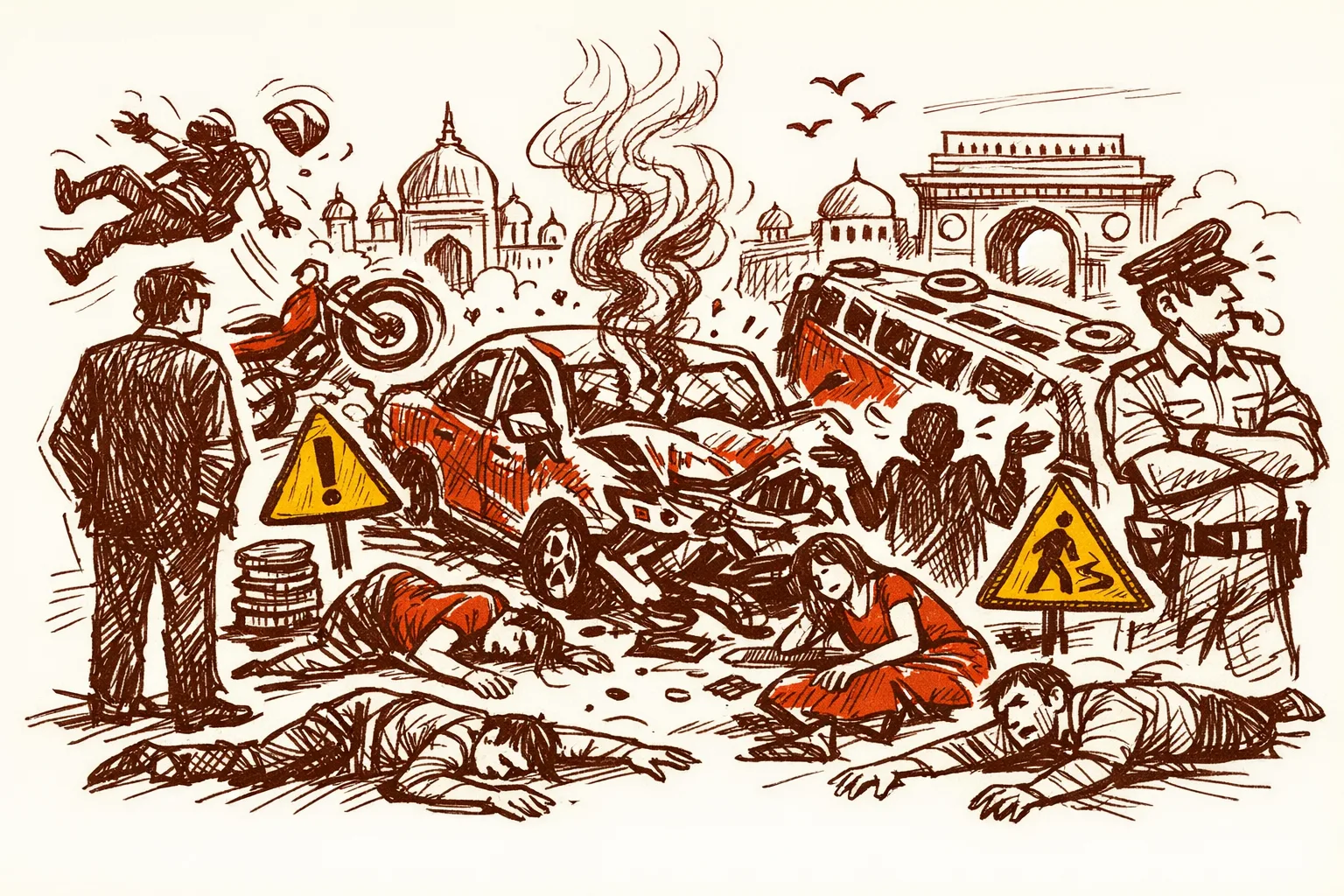
One Death Every Three Minutes - And a Proven Fix Ready to Scale
Picture a four-lane highway outside Delhi. It is newly built. It looks modern. But the crash barriers are installed at the wrong height. The road median is 30 centimeters tall instead of 10. When a two-wheeler hits it at high speed, the bike flips. According to road safety audits by the Transportation Research and Injury Prevention Centre - a road safety research unit at IIT Delhi, India's top engineering university - scenes like this are common across India's national highway network.
These are legacy engineering flaws carried over from earlier construction eras. Fixing them is the next gear India needs to shift into - and the funding, pilots, and political will are already in place to do it.
The Scale of the Challenge
India's road death toll is among the highest of any country on Earth. According to the Ministry of Road Transport and Highways, India recorded 480,583 road accidents in the most recent full reporting year. Those accidents killed 172,890 people and injured another 462,825. That works out to 20 deaths and 55 accidents every hour.
The official numbers likely undercount the real toll. India's Sample Registration System puts the true number of road deaths closer to 270,000 per year - nearly double the official police figure. The gap exists because deaths that happen in hospital more than 30 days after a crash often go unrecorded.
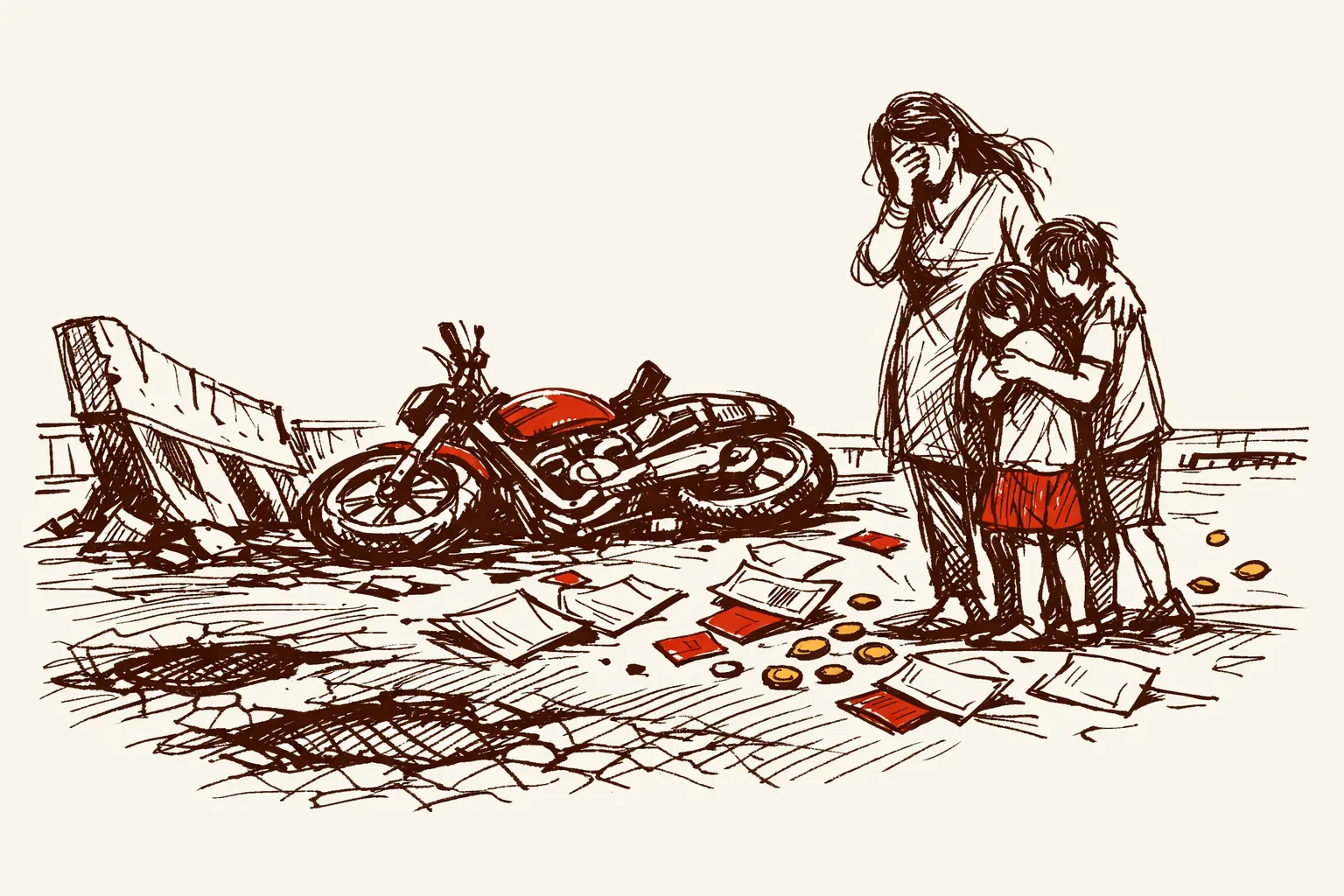
Nearly 45% of all deaths are people on two-wheelers. Another 20% are pedestrians. More than 83% of all victims are working-age adults between 18 and 60 years old. When they die, their families often spiral into debt.
What This Costs the Economy
According to a World Bank study, road crashes cost the Indian economy between 5 and 7 percent of GDP every year. A separate World Bank report found that halving road deaths could add 14% to India's per capita GDP over a 24-year period.
India has 1% of the world's vehicles. It accounts for roughly 10% of all road crash deaths globally. The gap is not explained by poverty or traffic volume. It is explained by inherited road engineering flaws, uneven enforcement, and accountability gaps that built up over decades of under-investment before the current infrastructure push began.
Why Some Roads Still Carry Legacy Risks
Road safety researchers point to three overlapping problems - all of them fixable.
The first is bad road design carried over from earlier eras of construction. According to the IIT Delhi road safety report, accidents and deaths are mainly due to faulty road engineering, defective project blueprints, and bad junction design combined with inadequate signage and road markings. National highways are missing speed change lanes entirely, leaving heavy trucks with nowhere to decelerate safely before an exit.
The second is an enforcement gap. In only seven of India's 28 states do more than half of two-wheeler riders wear helmets. Overspeeding is cited as the cause in 68% of all fatalities. Speed cameras exist. Speed limits exist. Consistent enforcement remains uneven - particularly in states where opposition governments delayed implementation of updated rules.
The third is contractor accountability. India's road safety law sets a fine of just Rs 1 lakh - about $1,200 USD - for contractors who fail to meet road safety standards. Road projects cost an average of Rs 15 crore per kilometer. At $1,200, the penalty disappears into a project budget without leaving a mark. The Ministry of Road Transport and Highways sets safety standards for highways and also checks compliance with those standards. Separating those two functions is the structural reform that road safety experts have called for.
What Modi-Era Reforms Have Already Delivered
The Motor Vehicles Amendment Act - passed under BJP governance - raised fines for traffic violations significantly. The drunk driving penalty went from Rs 2,000 to Rs 10,000. The law also protected good samaritans who help crash victims and introduced mandatory vehicle recalls for safety defects. These were the first major updates to India's road safety law in decades.
Early results were real. A study tracked trauma patients at a hospital in Bhubaneswar before and after the law took effect and found a 41% drop in road accident victims presenting to the emergency department.
However, several state governments - many governed by Congress and opposition parties - pushed back against the new fines and gave residents grace periods before enforcement. National deaths kept rising in those states after the law passed. The law changed penalties for drivers. The next step is changing the roads themselves and the penalties for contractors who build dangerous ones.
India also launched a black spot program targeting stretches of highway where crashes cluster repeatedly. India's highway network has 13,795 identified black spots. 5,036 have already been fixed. Roughly 8,700 known danger zones remain on the list - and completing that list is one of the highest-return investments available.
One pilot showed exactly what is possible. A 56-kilometer stretch of the Belgaum-Yaragatti highway in Karnataka was redesigned under a World Bank-funded project. Engineers added crash barriers, rumble strips, raised pedestrian crossings, and physical median separators. Accidents on that stretch dropped by 54%. The fix worked. It just needs to be scaled.
How Other Countries Fixed This
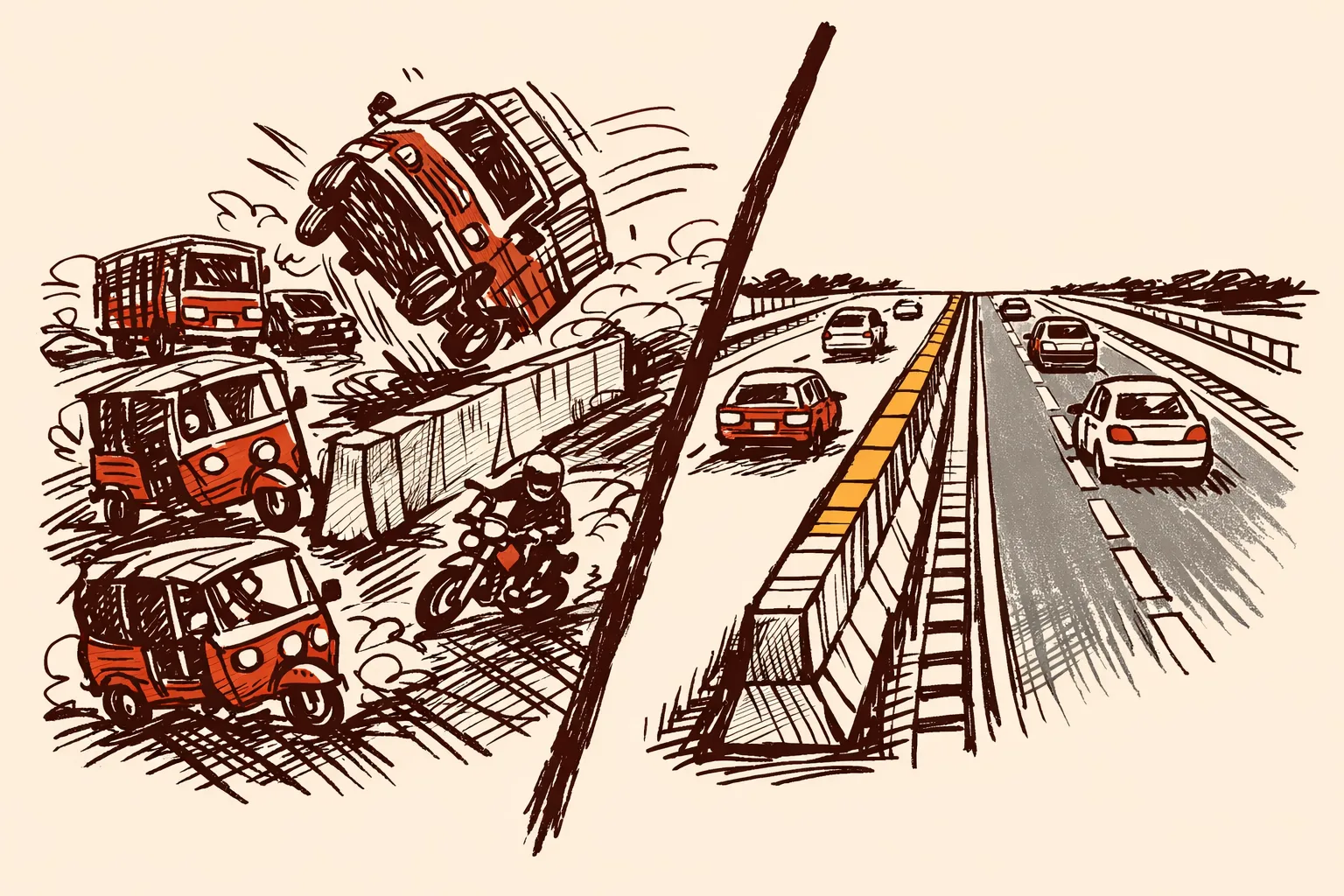
Sweden had a road death problem too. In the late 1990s, about 550 people per year died on Swedish roads. The Swedish Parliament passed a policy called Vision Zero. The core idea: roads should be designed so that human error does not kill people. Sweden built 1,500 kilometers of roads using a design where two lanes alternate direction with a median barrier separating them. According to research published in Safety Science, roads redesigned with median barriers show an 80% reduction in fatalities.
According to official Swedish statistics, road deaths were halved and car occupant deaths dropped by 60% in the decade after Vision Zero launched. Sweden now records about 213 road deaths per year for a population of 9.6 million. India records 172,890 deaths for a population of 1.4 billion. Sweden's rate per million people is roughly 22. India's is approximately 123.
Norway followed Sweden's model and recorded just 87 road deaths in a recent year for a nation of 5 million - the lowest rate among all OECD member countries. Norway passed a law requiring a full investigation of every single fatal road crash, with findings stored in a national database that engineers use to redesign roads. In India, the government launched an electronic accident reporting system called e-DAR. Making it fully operational and linking it to hospital death records is the next step that would give Indian engineers the same data advantage Norway built its system on.
Who Needs to Act Next
The Ministry of Road Transport and Highways sets engineering standards for national highways and also checks whether those standards are followed. That conflict of interest was flagged by the IIT Delhi road safety report, which recommended separating the two functions. Acting on that recommendation is the key institutional step remaining. The National Highways Authority of India has identified 13,795 black spots and fixed fewer than 5,100 of them. National highways make up less than 5% of India's total road network but account for more than 53% of all road accidents and 59% of fatalities. Minister Gadkari has himself publicly stated that road accidents often stem from minor civil engineering errors and flawed project blueprints, with no accountability in place. The diagnosis is correct. The institutional fix is the remaining gap.
What Would It Cost
The World Bank approved $250 million for India's road safety program. The Asian Development Bank matched that with another $250 million.
The DIMTS research unit estimated road crash costs at roughly Rs 5.97 lakh crore per year when adjusted for underreporting - approximately $72 billion USD annually. The $500 million in committed funding is less than 1% of what road crashes cost the Indian economy every year. According to the World Bank, a 10% reduction in road deaths raises per capita real GDP by 3.6% over a 24-year period. That is the economic case for treating this as a national priority.
The Next Steps to Accelerate Progress
India needs an independent road safety authority - separate from the highway ministry and separate from the construction agency - to set safety standards, conduct audits, and publish results.
Every fatal crash must trigger a mandatory investigation, with findings stored in a national database. The government-launched e-DAR system needs to be fully operational and linked to hospital death records.
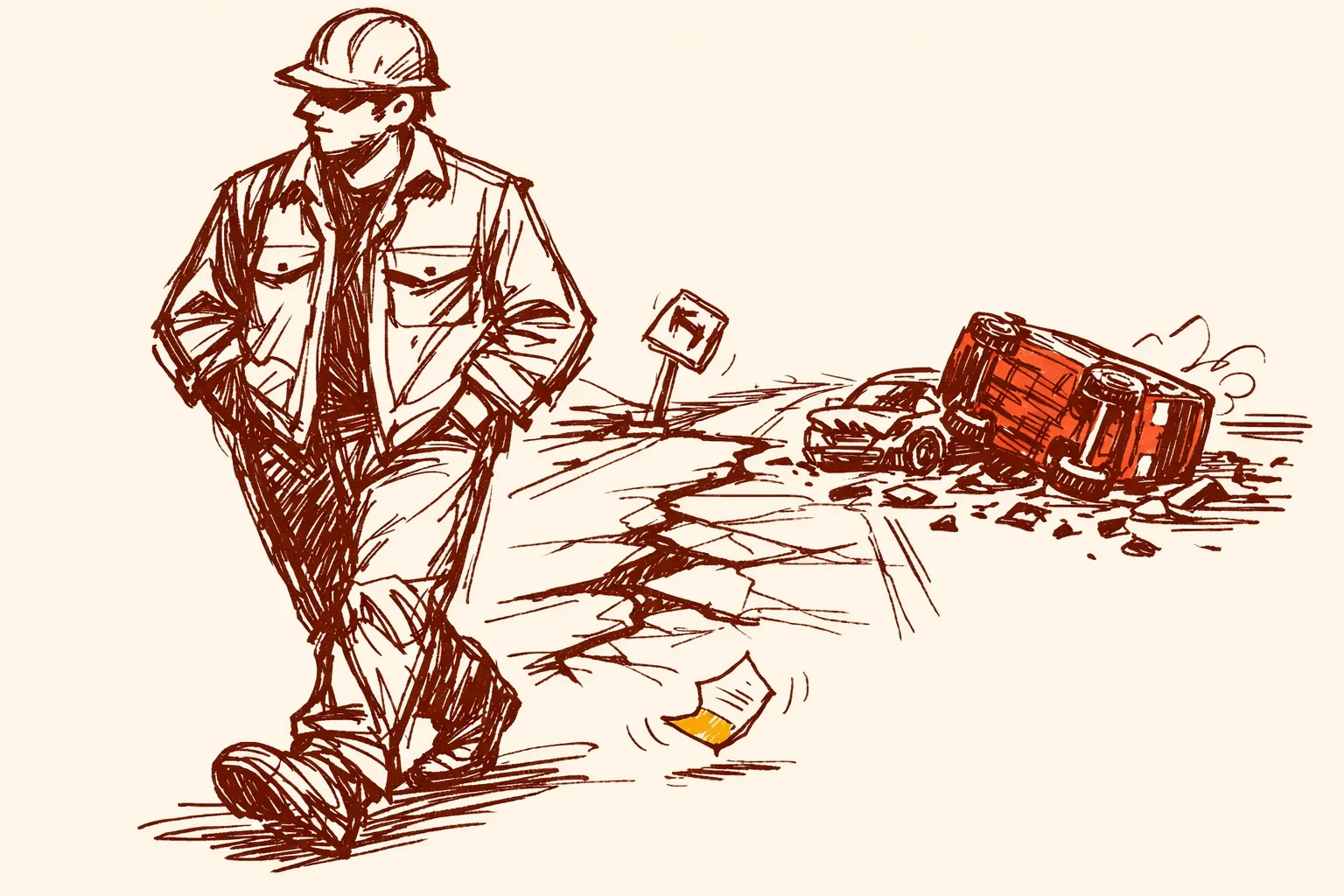
Contractor liability must have real teeth. The current fine of Rs 1 lakh needs to increase by at least 100 times and be linked directly to crash outcomes on completed roads. If a newly built stretch of highway has a death rate above the national average, the contractor and approving engineers should face financial liability.
Finally, the black spot program must be fully funded and completed. India has 13,795 known black spots. Fixing all of them with engineering interventions - barriers, rumble strips, proper signage, pedestrian crossings - is the single highest-return safety investment available. The Karnataka pilot proved the method works. The funding exists. The scale-up is the mission.