The Problem You Can See
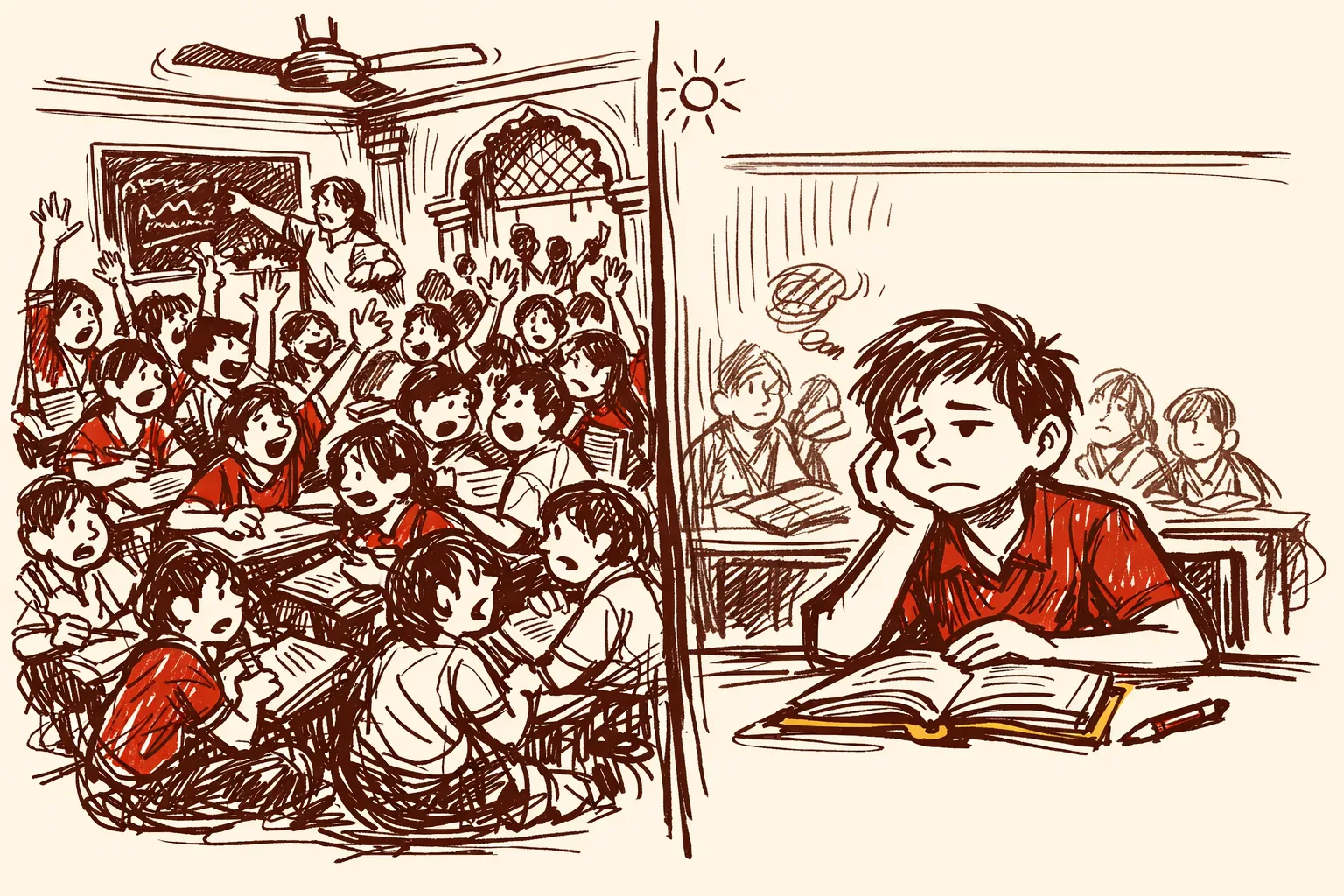
Walk into a government primary school in rural India. The classroom is built. The teacher is listed on the payroll. The child has a seat. Now ask that child to read a simple sentence. Odds are, they cannot.
This is not a small problem. It affects hundreds of millions of children across India's villages and towns. And it costs the country money it cannot afford to lose.
How Bad Is the Learning Crisis
The Annual Status of Education Report (ASER) is India's most trusted measure of learning. It is run by Pratham, a nonprofit education organization, and it surveys children directly in their homes. The most recent survey reached 649,491 children across 605 rural districts.
Three out of four children in Class 3 cannot read a Class 2 text. According to ASER, 66 percent of Class 3 students cannot do simple subtraction. By Class 5, 70 percent still cannot perform basic arithmetic.
Now look at what happens when these children grow up. ASER's survey of 14-to-18-year-olds found that one in four young people at that age could not read a Class 2 text in their own language. More than half could not solve a simple division problem.
That is not a school problem. That is a workforce problem. A productivity problem. A GDP problem.
According to a National Bureau of Economic Research study cited by Invest India, if children currently enrolled in South Asia's schools gained basic educational skills, the region could see economic gains of $97.8 billion. That would be an 81 percent increase in GDP. If all children in the region gained those skills, the gains rise to $259 billion. India's share of that unrealized gain is enormous.
The Scale of the Problem
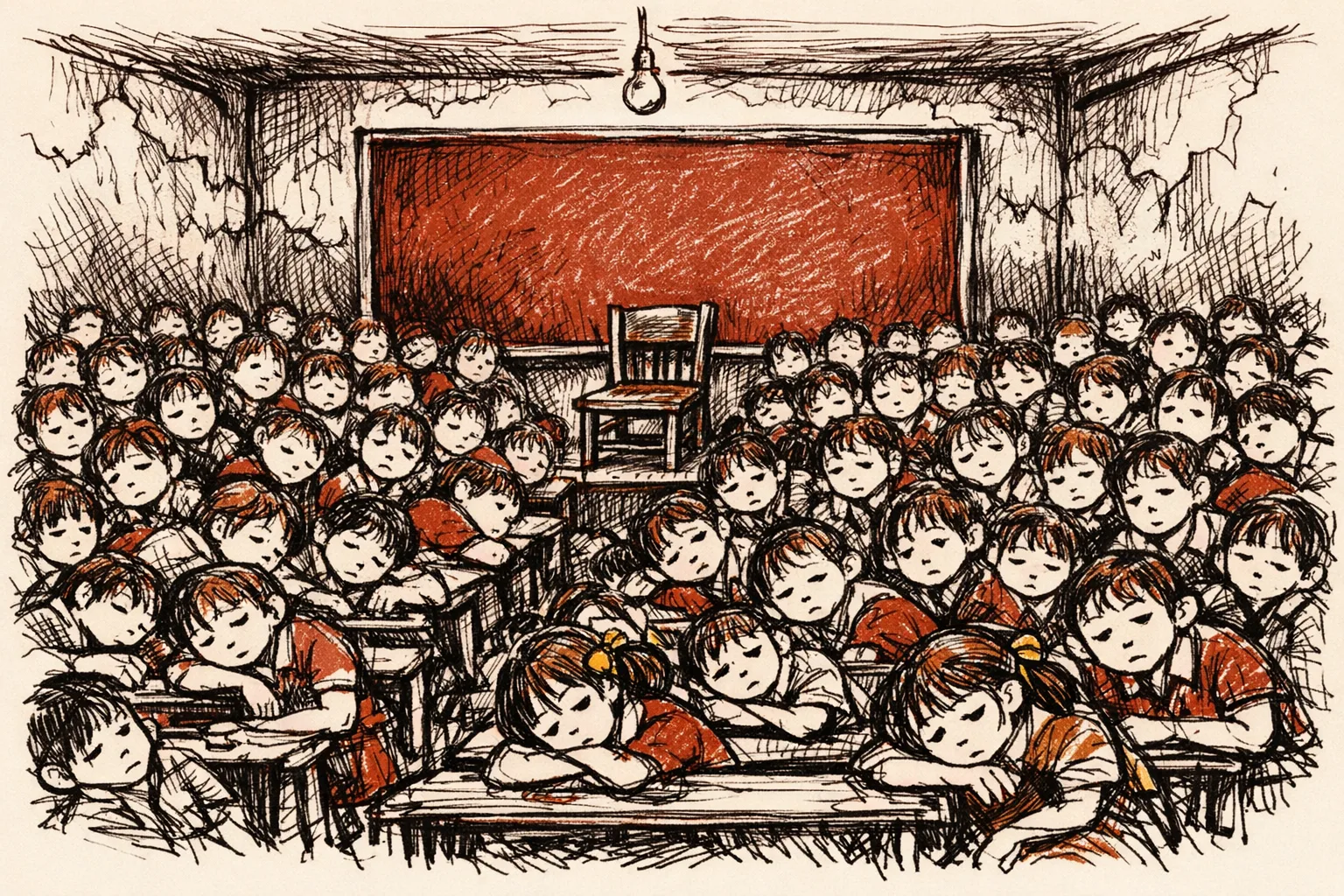
India has roughly 250 million school-age children. Enrollment is near universal, at about 98 percent according to government data cited by Policy Circle. But enrollment is not the same as learning. According to the World Bank's Learning Poverty Brief for India, 56 percent of Indian children at late primary age cannot read and understand a simple text by age 10.
Teacher absenteeism makes it worse. A World Bank study conducted in 3,700 schools across 20 Indian states found that 25 percent of teachers in government primary schools were absent on any given day. Of those who were present, only about half were actually teaching.
According to economist Karthik Muralidharan and colleagues, teacher absence costs India's education system around $1.5 billion per year. That is $1.5 billion spent on teachers who are not in the room.
Why It Is This Way
India's government schools are measured on inputs, not outcomes. A school gets rated on whether it has a building, toilets, and teachers on the payroll. Nobody gets fired if children cannot read at the end of the year.
The J-PAL research lab at MIT studied this directly. In a survey of 3,000 Indian government schools, only one principal reported ever having fired a teacher for poor attendance. One principal. Out of three thousand schools.
Research published in the British Journal of Political Science found that teacher absenteeism in Indian government schools follows the election cycle. Teachers show up more often when elections are approaching, because politicians apply pressure. Between elections, attendance drops.
There is also a teaching method problem. In most government classrooms, one teacher teaches all children at the same grade level, even when their actual skill levels vary wildly. Wilima Wadhwa, Director of the ASER Centre, has noted that teachers typically teach to complete the curriculum - focusing on the top of the class and leaving the rest behind.
The result: the gap grows every year. A child who cannot read in Class 2 cannot follow Class 3, or Class 4. By Class 8, they hold a certificate that says they attended eight years of school. The certificate does not say they learned.
What Has Already Been Tried
India has not ignored this problem. It has passed major laws and launched national programs. The results have been partial at best.
The Right to Education Act, passed in 2009, made free and compulsory education a legal right for all children aged 6 to 14. It mandated school infrastructure standards and required private schools to reserve 25 percent of seats for children from poor families. Upper primary enrollment increased by 19.4 percent between 2009 and 2016.
But it did not fix learning. A study by researchers at UCLA, published by the National Bureau of Economic Research, found that test scores declined sharply in India starting two years after the law was passed. The main reason: the law banned holding children back a grade through Class 8, regardless of their performance. Children who could not read were promoted anyway. Teachers lost the main tool that created pressure to teach.
By 2016, 58 percent of children in Class 3 could not read a Class 1 text. A 2019 amendment allowed states to hold exams in Class 5 and Class 8, partially correcting the problem. But a decade of automatic promotion had already done its damage. The Act counted buildings and teachers. It did not count whether children learned.
The National Education Policy of 2020 is India's most recent and most ambitious attempt at reform. It calls for spending 6 percent of GDP on education, sets a target of universal foundational literacy and numeracy, and backs the NIPUN Bharat mission, launched to focus specifically on reading and arithmetic in Classes 1 through 3.
ASER data from its most recent survey shows the first real signs of improvement in two decades. The percentage of Class 3 students in government schools who could read a Class 2 text rose from 16.3 percent to 23.4 percent in two years. ASER's Wilima Wadhwa called it more than a post-pandemic recovery and attributed it to the focus on foundational learning.
This is real progress. But the money has not followed the policy. India's total education spending was 2.9 percent of GDP according to the Economic Survey. The central government alone spent just 0.38 percent of GDP on education. The National Education Policy called for 6 percent. The Kothari Commission recommended 6 percent back in 1968. India has never reached it.
How Other Countries Fixed This
South Korea - Education as an Economic Strategy
In 1960, South Korea was one of the poorest countries on Earth. Its per-capita income was roughly $100 a year. Today it is a top-fifteen global economy with near-universal literacy and students who consistently top international math and science tests.
The Asia Society documents that South Korea's government committed to education as a national economic strategy from the 1960s onward. The Ministry of Education's budget grew to $29 billion, about 20 percent of total central government spending. Literacy rose from 22 percent in 1945 to over 93 percent by the late 1980s. Curriculum reform was tied to economic planning. What Korea needed its workforce to know, it taught.
Vietnam - Proof That Low Income Is Not an Excuse
Vietnam had a per-capita income of roughly $2,170 in 2016. It has corruption. It has remote rural areas. It has ethnic minorities with less access to schools. In almost every way, its challenges look like India's.
And yet when Vietnam took the PISA test in 2012, it ranked ahead of the United States, the United Kingdom, Australia, and Sweden.
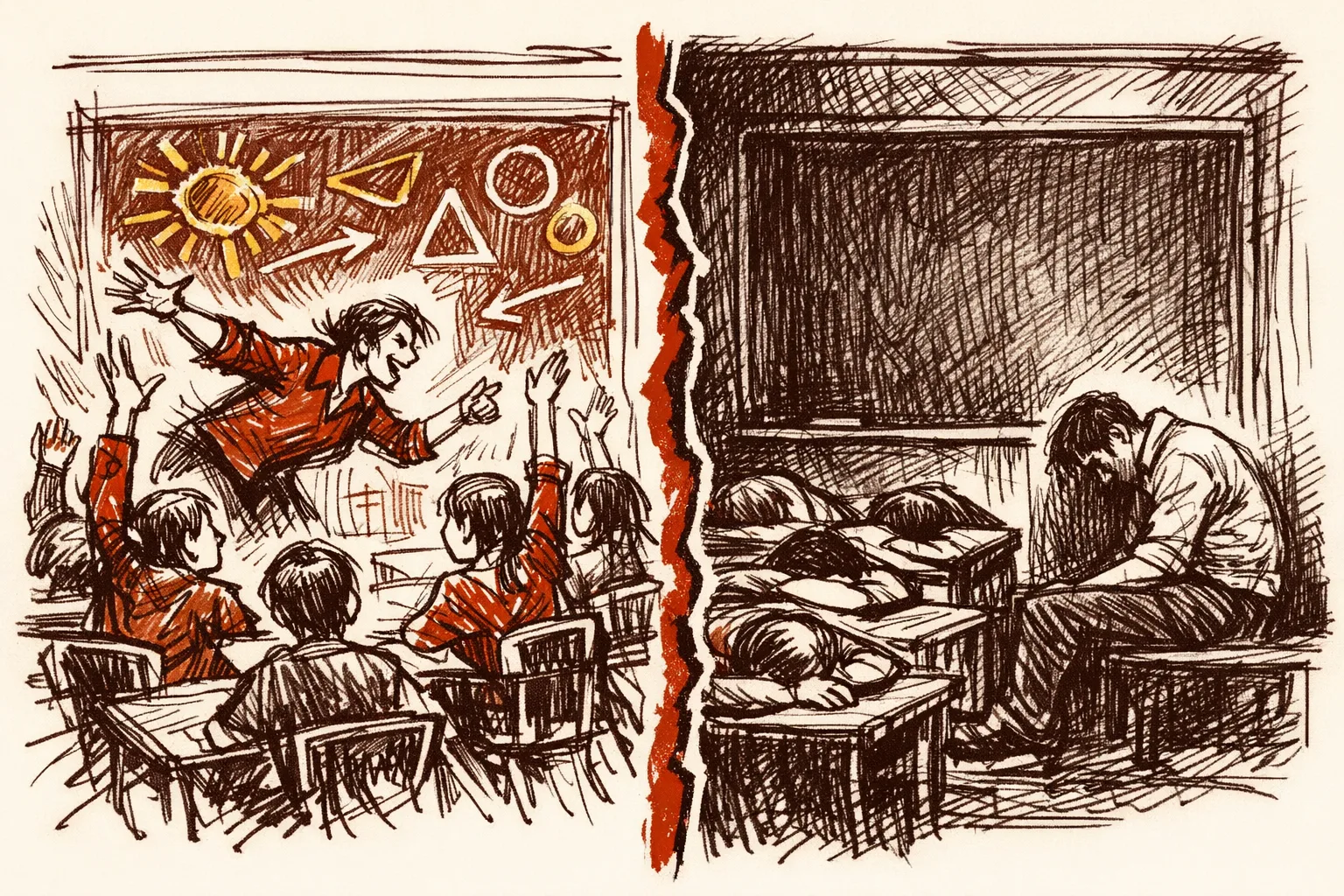
Teacher absenteeism in Vietnam is virtually unknown. Vietnamese teachers show up. They teach. The government earmarks 20 percent of its budget for education and mandated minimum quality standards across all schools. A World Bank analysis found that teacher quality - specifically whether teachers explain ideas clearly and respond to student questions - was the single most important factor in Vietnam's results.
Who Is Accountable
The Ministry of Education controls the National Education Policy and the NIPUN Bharat mission. It oversees the Samagra Shiksha program, India's main vehicle for funding school education. According to budget analysis by NewsClick and the Ministry of Education, Samagra Shiksha received an increase of just Rs 146 crore in one budget cycle, while the revised estimate for the previous year was cut by nearly Rs 4,450 crore. That is not a system being treated as a priority.
State governments control about 85 percent of total education spending, according to the Reserve Bank of India's State Finances Report. Teacher hiring, salaries, transfers, and attendance monitoring are all managed by state education departments. When a teacher is absent for months and nothing happens, the state education department is accountable.
What Would It Cost
Reaching the National Education Policy target of 6 percent of GDP would require roughly doubling current investment. At India's current GDP of approximately $3.7 trillion, that gap is over $100 billion a year in missing investment.
The World Bank's Education Finance Watch found that the average child in a low-to-middle income country loses about 10 percent of their expected lifetime earnings from learning losses. Multiplied across India's hundreds of millions of school-age children, that figure runs into trillions of dollars in lost productivity.
The J-PAL research lab showed that monitoring teacher attendance with simple cameras reduced absence and raised student test scores. The program cost about $120 per teacher per year. Each extra day of teacher presence cost $2.20. Students in monitored schools were 62 percent more likely to graduate to regular government schools.
Muralidharan and colleagues also showed that increasing the frequency of school inspections was more than ten times more cost-effective at improving learning than hiring more teachers. India keeps hiring teachers and reducing inspections. That is the opposite of what the evidence recommends.
What Needs to Happen
First: tie teacher pay to verified attendance and student learning outcomes. The J-PAL camera experiment showed that linking pay to verified presence changed behavior fast. State education departments should require verified attendance and tie salary increments to measurable learning results at the class level.
Second: make foundational reading and arithmetic the only priority in Classes 1 through 3. Every state must be required to publish ASER-equivalent learning data every year - not enrollment numbers, but a simple answer to one question: can this child read?
Third: close the funding gap between the 6 percent GDP target and current spending. Policy Circle's analysis of Reserve Bank of India data shows that states like Kerala, Himachal Pradesh, and Odisha, which spend more than 15 percent of their budgets on education, produce better learning outcomes. India needs legally binding minimum education spending floors at both central and state levels.